 Click on the title of a post to view a full gallery of images.
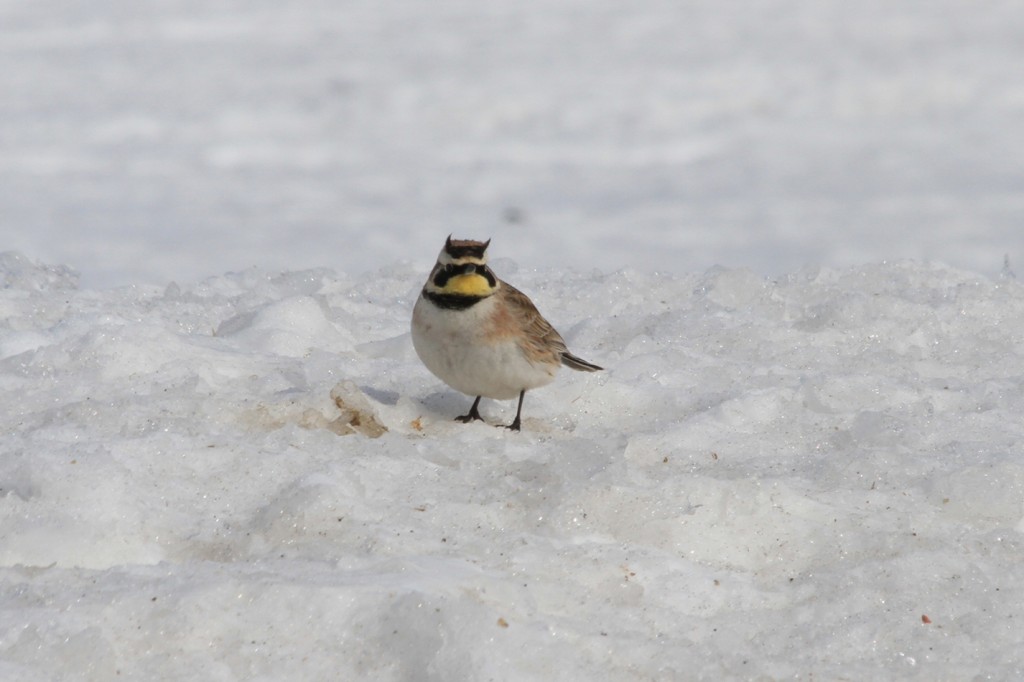
Horned Lark Front
The Horned Lark is a year round resident of Michigan, but many people may assume that they are sparrows if they see them. Late winter to early spring is the best time to see them in the open farm country prior to nesting. While driving along rural roads, especially on roads along agricultural fields, watch for small flocks of brown birds flying from the road sides out to the snowy fields and back as the cars pass. Their flight is low and only covers short distances when disturbed They tend to walk rather than hop while foraging in open fields and roadsides with erratic movements. Horned Larks are the only true lark in the Alaudidae family in North America. Their range expanded into Michigan with European settlement and the subsequence advancement of agriculture. As farm lands have decreased, so has the breeding population in the state. Courtship begins in March and nesting soon follows with a depression in the bare ground lined with fine grasses used for a nest. These nesting locations are often on elevated ground above the waters of the melting snows still surrounding them.

Horned Lark Side
At 7 to 8 inches they are smaller than a Robin and larger than a sparrow. The backs are light brown and often match the color of the local soils for camouflage. The undersides are lighter to whitish color. They have a yellowish throat with a black downward turned streak through the eyes. The birds will have a yellowish or white strip above the eye and a black crescent on the breast. The black tufts or “horns” on the head are not always seen, but make watching to see them worth the effort. At this time of year between winter and spring when there seems to not be much happening and things are still dull and grey, the song and sight of this little bird is a welcome reminder that spring is coming.
As with many song birds that are on the decline, habitat loss is the main cause. By preserving farm land and open spaces we can help this little treasure remain and survive in Michigan.
- Horned Lark Front

- Horned Lark Side